


What you can expect to see on the web in 2015



UI Animation
Those whose minds can stretch back 10 years ago will remember that browsing the internet was almost a comical experience. Surrounding basic text web pages with flashy pop ups, bright colours and other wild animations was the norm. The software standard that served these animations was Adobe Flash- often criticised for security flaws and being a memory intensive application. Sadly these animations slowed down web browsing experiences. Nowadays these animations can be rendered directly in web browsers, e.g. Google Chrome, removing the need to install any other software thanks to developments in the main languages of the web — HTML, CSS and Javascript.
Couple this with the fact that technology has progressed to a stage where everyone has access to a device that can provide a smooth web browsing experience, it is clear that there are strong foundations for UI animation to see a renaissance of sorts in 2015. By ‘UI’ I mean that these animations will be less ‘in your face’ and more of a feature used to improve interaction and navigation for users. The subtlety that you can expect to see with these animations will certainly be in line with minimalist approaches to web design. See what kind of animations are possible to replicate with the following two tools:
This will be of interest for businesses that operate in a fiercely competitive industry and whose websites are pivotal to their respective success. Good implementation of UI focused animation could prove to be a positive differentiating factor since other aspects of design such as typography, consideration of white space and a colour set will have been covered as a standard.
Card Design
Pinterest, Facebook, Twitter and other popular social media sites already use ‘cards’ to display snippets of information in a digestible view.
Google’s personal assistant app – ‘Google Now’ uses cards to give you updates on things it has deemed of interest to you by using data linked in from your Google account. To see a useful example of this in action take a look at the screenshot below. It recognised a credit card statement in my Gmail inbox and then reproduced key parts of that email, such as the payment due date, in an easily readable manner- clever huh?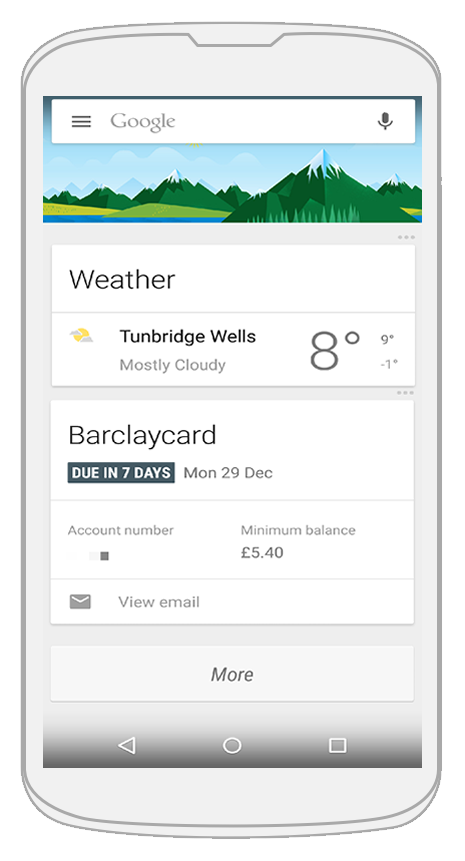
Another pointer for greater use of card design is that the adoption of smart watches is set to increase in 2015, with the Apple Watch set to be a popular choice.
On desktop there is less need for card design due to the larger screen real estate, however because it is widely accepted that you should take a ‘mobile first’ approach to design it will naturally creep in to all aspects of the web. Again Google provide another good example of this as they have been putting ‘instant results’ at the top of some search result pages for quite a while now. Learn about what you can ask and get instant answers for here: http://www.google.com/insidesearch/tipstricks/.
Video Content
Although not strictly an aspect of web design, the use of video by businesses to convey various messages is set to increase throughout the year. This is in part down to cheaper video production technology, increasing internet speeds, and the ease of access to video delivery networks such as Youtube and Vimeo. If you view our site on desktop then you will have noticed the time-lapse video on the homepage. This is just one of the many ways to utilise video in the world of business.
All of these tools could be implemented into your website to give your users a better experience. This is an important consideration as people who come across your site make a reflective judgement on the nature of your business and whether they want to seek out your products and services.


