


What is UX and why is it important to your website?



Why is UX important for websites?
A website is your value proposition, it generates your business sales leads, it showcases your brand and highlights what you offer. It’s also now a place the majority of your customers will go when they first hear about your brand, before making a decision whether to use you or a competitor. A study by Forrester found that a superior UX can increase your current conversion rates by 400%. Numbers like that highlight the importance in taking user experience seriously.
What constitutes good UX?
At Studio44, we have extensive experience on what constitutes good UX and we’re always working to ensure that all our websites are developed to be user-friendly and create great user experiences! The key to successful UX starts at the beginning of the process, during initial discussions so we can understand the audience as what constitutes good UX for a software product targeting a young demographic is very different to a care home for example who are targeting a much more elderly audience. Here is a summary of some of our top tips for creating great UX:
- Keep the website simple, there needs to be a clear user navigation path throughout the website
- The logo might not tell you exactly what the business does, so landing on the homepage of the website needs to indicate clearly what is the core service/ product offerings
- All calls to action and links need to be obviously outlined and easy to use
- The menu needs to be minimalistic with a logical structure and make sense to the user. Every item present on the website needs to be accessible with the fewest clicks possible.
- The user needs the ability to make contact from any page, at all times
- Images that supplement the page content instead of confusing the user
- Conducting usability testing from the offset and before the site goes live to ensure that broken links are eradicated

Where do the problems with UX lie?
So, on the flipside, websites that constitute poor UX usually involve the following:
- Broken links with missing pages
- Long complicated forms
- Overly complex website design that confuses users
- Information overload / no information on what the business offers
- Navigation that is confusing and difficult to use
- Non-responsive designs
- Inconsistent style and layout
- Poorly optimised pages with slow load time

Techniques to improve UX on websites
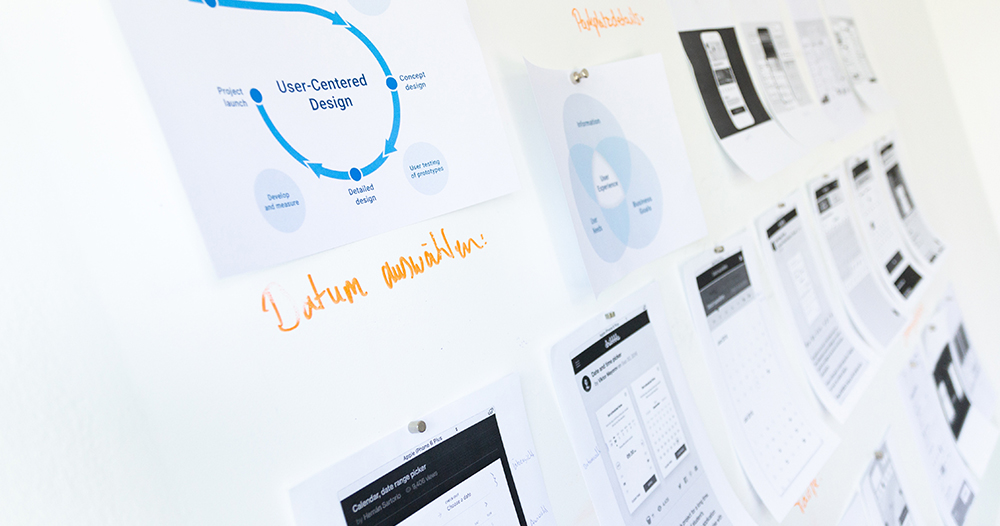
Planning - We approach every website we undertake with a real emphasis on planning. This may include wireframing the process, or carefully considering design elements before we begin. Whatever the specific needs for each project, constructing an accurate blueprint of how the website will look and feel, helps envision the styling and the layout of the website. It helps you outline potential UX pitfalls, necessary functionality requirements and aids a seamless design process.
User Testing – Websites designed to look aesthetically pleasing but without a core focus on fucntionality can be like creating a supercar without an engine. If the website isn’t functional, it won’t generate any business. We always recommend carrying out user testing to collect feedback and identify any UX problems. If a website is already live, we can use heatmaps to outline any areas which are leading to you losing enquiries. Before launching a website, in-house testing is an effective way of eradicating any problems or ‘bugs’.
Google Analytics – Collected data can help you identify what is working on your website and what needs to be improved. Metrics such as bounce rate and average time spent on a page give a good indication to what is working and what needs to be improved. If your bounce rate is high, this could be due to having a pretty poor UX design!
If you would like to talk more about improving your website UX, or have any questions do not hesitate to get in touch with us!


