


Broken links, do they matter?



What are broken links?
A broken link is a link to a webpage that doesn’t work. If a user types in or clicks on the link, they will be directed to a 404 page or error message. Links may be broken for a variety of reasons, including the URL being changed, the URL being mistyped, the webpage no longer being online, or the linked page having restricted access (such as by being behind a password or firewall).
What impact do broken links have?
Search engines don’t like broken links – when a website that has been crawled contains broken links it will usually be significantly pushed down the search rankings. So, if you want to be on the first page of Google make sure that your links work! Secondly, websites with broken links are poor from a user experience perspective. The vast majority of users will exit your website without engaging fully or making an enquiry.
What can you do about broken links?
We have listed a couple of key resources for reducing broken links on your website:
- Test links you include in your articles or on a new webpage before you make the page ‘live’.
- If you change the URLs for your content, make sure to set-up 301 redirects, which will automatically redirect anyone who clicks on the old link to the new page. If using WordPress, there are a number of plugins you can use to set up 301 redirects.
- Use a link checker (such as this one) to find out if you have broken links. You can then go to the relevant pages and update or remove any broken links. It’s also worth scheduling in a reminder every few months to check again and keep links up-to-date.
- When creating new service pages or products pages, make sure you use simple URLs so they’re easier for users to type in and find.
- If you change the URLs for your content, make sure to set-up 301 redirects, which will automatically redirect anyone who clicks on the old link to the new page. If using WordPress, there are a number of plugins you can use to set up 301 redirects.
What are 404 pages and why are they important?
404 error pages are important to have, when a user tries to reach a broken link within your website, they will be automatically redirected to the 404 page, and if it’s well-designed, it can help keep the user on their journey on your website.
A typical 404 page will consist of some sort of messaging that informs the user that the page they tried to find is not available and gives them options to reach other content quickly and easily.
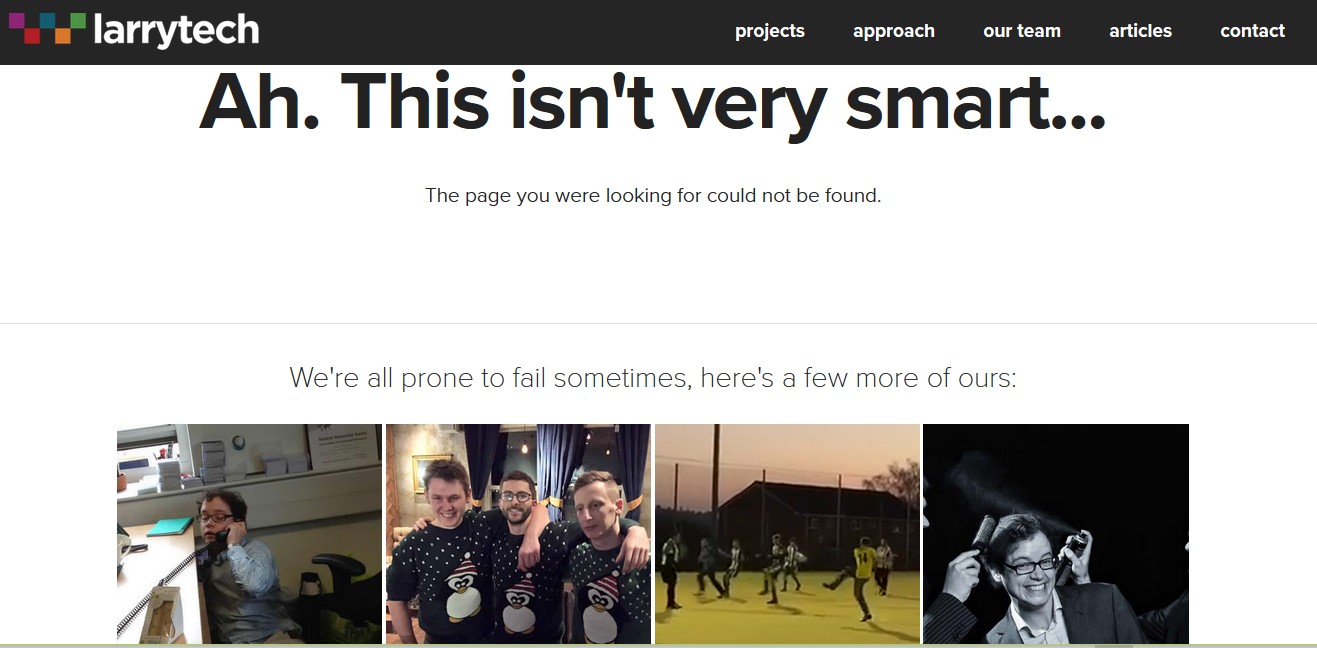
If you are looking for help with broken links, or to find out more information on 404 pages. Come and have a chat with us and we can discuss ways of enhancing the performance of your website.


